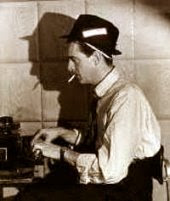
I'm just going to open a forum here... Is the job worth it??
CH
Wednesday, February 17, 2010


Killing Confession via the BBC
An extraordinary story broke yesterday when Ray Gosing, a veteran BBC journalist, apparently confessed to the killing of his terminally sick lover on a national broadcast
The confession was part of the programme Inside Out, which was aired by the BBC on Monday night.
Police have arrested Mr Gosling who is now 70 on a murder charge but so far he refuses to elaborate on the identity of his former lover or the specific place and date the event took place.
Whether his claims are true has yet to be verified but given what appears to be genuine distress and emotion during the confession i suspect it may well be true.
Have a look for yourselves
http://www.youtube.com/watch?v=YKFehQYOEV0
Here is an interview shortly after the broadcast
http://www.youtube.com/watch?v=J3anUQ0_rpc&feature=response_watch
This im sure will reignite the debate on euthanasia and the law surrounding assisted suicide and while i dont feel the need to wade into that on this blog, i think this is a great example of a news story that has huge implications in the wider context.
A few key questions:
Were the BBC right to broadcast this before the police had been notified?
Should it have been broadcast at all?
Should the BBC have verified his claims before the broadcast?
Over to you guys.
LS
The confession was part of the programme Inside Out, which was aired by the BBC on Monday night.
Police have arrested Mr Gosling who is now 70 on a murder charge but so far he refuses to elaborate on the identity of his former lover or the specific place and date the event took place.
Whether his claims are true has yet to be verified but given what appears to be genuine distress and emotion during the confession i suspect it may well be true.
Have a look for yourselves
http://www.youtube.com/watch?v=YKFehQYOEV0
Here is an interview shortly after the broadcast
http://www.youtube.com/watch?v=J3anUQ0_rpc&feature=response_watch
This im sure will reignite the debate on euthanasia and the law surrounding assisted suicide and while i dont feel the need to wade into that on this blog, i think this is a great example of a news story that has huge implications in the wider context.
A few key questions:
Were the BBC right to broadcast this before the police had been notified?
Should it have been broadcast at all?
Should the BBC have verified his claims before the broadcast?
Over to you guys.
LS
Tuesday, February 16, 2010
Whatcha say?
Tubs’s tonsils failed him on Friday night. As if torturing Gerry Adams about his brother's upcoming sex abuse case wasn't bad enough, he couldn’t wait to move into the IRA domain. Countless times he questioned Gerry about his brother, until he cornered himself. It seemed Gerry was in for a grilling. He wasn't the criminal, yet Ryan chose to trial him by media. Feelings aside, he just came across as trying to gain one over on Gerry, hassling and harrying his every twitch.
Then it came, Ryan's face lit up as he asked the million dollar question-how do you sleep with blood on your hands? , or something along those lines. Then Gerry gave a response that shook the nation and brought the big man back to earth. Ryan looked as if he soiled himself (in nice terms). Gerry’s response was that the time for violence was over and he pointed out the fact that Ryan's grandfather was at one time in the IRA. Maybe Ryan shouldn't have gone on the ‘Who do you think you are?’ show after all. The joys of being a public figure I guess.
Tubs stuttered for words and all he could muster was that 1/3 of the audience had a granddad in the IRA. Pathetic. Yet, he got all the plaudits from the crowd. I think Ryan’s statement got lost in translation, because he lost the battle. It was all his own doing though, he just couldn't wait. He launched in without fuel, and he certainly couldn't stand the heat.
I am a fan of Ryan's but he seems to be very controversial and disregard the rapport that is needed to gain the trust of his interviewees. On the same show he quizzed a member of the Nationwide team about the death of his wife with the first question. As a journalist I know we are required to go the hard yards and ask the difficult questions, but this struck me as half-hearted and depressing.
http://www.rte.ie/player/#v=1066427
To be honest Gerry’s comments weren’t that controversial. Yet, it seems that the media have nothing else to discuss. Then again, anything that takes away from the ‘R’ word is a welcome advocate, just look at Jedward. The Belfast Telegraph lead with the headline: Chat show Tubridy riled over Gerry Adams IRA remarks.
Read more: http://www.belfasttelegraph.co.uk/news/local-national/chat-show-tubridy-riled-over-gerry-adams-ira-remarks-14682606.html#ixzz0fiTsMUKy
Gerry played a clever game, but that’s what politicians do, they deflect attention somewhere else. I’m not supporting Adams here, but I think he played his cards and controlled the interview. He was right when he said the time for change and peace had come. I’m just sorry they hadn’t seen it that way from day 1 and it took the atrocities of the Troubles to bring this resolve.
My grandfather was in the IRA too tubs, so you are not alone. Back then it was probably like joining the boy scouts, for the thrill of it. If you’re going to get offended every time someone puts the spotlight on you, you really shouldn’t be there (Give me your job). As for my Nan, she prefers Kenny. Better late than never.
D.K
Then it came, Ryan's face lit up as he asked the million dollar question-how do you sleep with blood on your hands? , or something along those lines. Then Gerry gave a response that shook the nation and brought the big man back to earth. Ryan looked as if he soiled himself (in nice terms). Gerry’s response was that the time for violence was over and he pointed out the fact that Ryan's grandfather was at one time in the IRA. Maybe Ryan shouldn't have gone on the ‘Who do you think you are?’ show after all. The joys of being a public figure I guess.
Tubs stuttered for words and all he could muster was that 1/3 of the audience had a granddad in the IRA. Pathetic. Yet, he got all the plaudits from the crowd. I think Ryan’s statement got lost in translation, because he lost the battle. It was all his own doing though, he just couldn't wait. He launched in without fuel, and he certainly couldn't stand the heat.
I am a fan of Ryan's but he seems to be very controversial and disregard the rapport that is needed to gain the trust of his interviewees. On the same show he quizzed a member of the Nationwide team about the death of his wife with the first question. As a journalist I know we are required to go the hard yards and ask the difficult questions, but this struck me as half-hearted and depressing.
http://www.rte.ie/player/#v=1066427
To be honest Gerry’s comments weren’t that controversial. Yet, it seems that the media have nothing else to discuss. Then again, anything that takes away from the ‘R’ word is a welcome advocate, just look at Jedward. The Belfast Telegraph lead with the headline: Chat show Tubridy riled over Gerry Adams IRA remarks.
Read more: http://www.belfasttelegraph.co.uk/news/local-national/chat-show-tubridy-riled-over-gerry-adams-ira-remarks-14682606.html#ixzz0fiTsMUKy
Gerry played a clever game, but that’s what politicians do, they deflect attention somewhere else. I’m not supporting Adams here, but I think he played his cards and controlled the interview. He was right when he said the time for change and peace had come. I’m just sorry they hadn’t seen it that way from day 1 and it took the atrocities of the Troubles to bring this resolve.
My grandfather was in the IRA too tubs, so you are not alone. Back then it was probably like joining the boy scouts, for the thrill of it. If you’re going to get offended every time someone puts the spotlight on you, you really shouldn’t be there (Give me your job). As for my Nan, she prefers Kenny. Better late than never.
D.K
Saturday, February 13, 2010
The latest polls
reposted from tomfelle.com
THE latest poll in today’s Irish Independent brings some good news to Fine Gael and should settle party jitters following a tumultuous week, but Enda Kenny’s position is far from safe.
The loss of George Lee, who explained cogently why he left and what was wrong with Fine Gael and Irish politics on Pat Kenny's Frontline program last Monday night, does not appear to have significantly damaged the party.
Fine Gael, at 34 per cent, would undoubtedly be in an incredibly strong position to form the next Government. Were that percentage repeated on election day, the party should be able to comfortably win around 60 seats.
This can be accounted for by the built in “big mo” bias, to abuse a West Wing phrase, in the Irish PRstv electoral system. The party would under a list system get 34 per cent of the available 166 seats, about 55. However a typical seat bonus of of anything from five to 10 seats would be normal under the Irish system, as the final seats in tight races and five seaters usually fall toward the party with momentum.
The reverse is true of Fianna Fail. Where its electoral results repeated on election day, the party would likely lose 30 seats.
Garret FitzGerald, writing recently in The Irish Times, suggests that the media were misreading polling data wildly, and were ignoring the margin of error built into every poll (the confidence interval around a point estimate, for example a poll suggesting a two per cent rise for Fine Gael, or a one per cent dip, is meaningless as the confidence interval is almost always +/- three per cent).
This is undoubtedly true, and screaming headlines of recent Fianna Fail come backs after slight gains in one poll were unfounded. However there is now very strong evidence, from a range of opinion polls and during a number of months, that Fine Gael is at or around the low to mid 30s, Fianna Fail is at or around 25 to 27 per cent (historic lows) and Labour are stuck in high teen percentage support.
Equally, it is evident from all polling data that Enda Kenny has failed to connect with the Irish public and just one in four people are satisfied with his performance as leader.
The belief in the public that Kenny is a lightweight and somewhat cold and aloof sits uncomfortable, some might argue, with the reality. Kenny is one of the most affable in the Dail, in person he is warm and generous and is extremely hard working.
However he has never been a good television performer, he is not a naturally aggressive debater or orator, and in one and one counters with Brian Cowen he has come off as loser on many occasions. That may be why the public at large view him as weak.
Given Lee’s resignation, and talk of “murmurings” within party ranks, and lets be honest the party’s love of building guillotines to cut off it’s leader’s head, the question remains, how long more can Kenny last?
Some years ago the former Fine Gael TD Austin Deasy famously said there was “blood on the walls” following the ousting of John Bruton. Bruton survived an initial challenge but lost the leadership some months later after a second heave.
TDs within the party say Kenny has their full support, but privately a number concede his position is secure only “for now”. No one in the parliamentary party has as yet openly challenged him, but unless his own performances drastically improve in the coming weeks and months that may well change.
TF
Thursday, February 11, 2010
I'm begging you for mercy
On last night's MidWeek show the issue of begging was raised. A recovered junkie called Willie gave a heartbreaking account of how he stole from his siblings to fund his addiction, before sleeping the streets, robbing and begging determined his life path. He spent several stints in and out of prison and finally kicked the addiction with professional help and advice. Today, Willie is a stand-up comedian who gigs all over Ireland. But was Willie one of the lucky few? And will the new law do more harm than good?
http://www.tv3.ie/shows.php?request=midweek
Willie said he earned between €100-200 a week, most of which he used to buy drugs. He said that he was "ashamed" when he was forced to beg. When he saw anyone who might recognize him he used his hoodie to mask his face. He added that gardai never asked him to move because he kept to himself and was not a public nuisance.
The new begging law would ban begging near ATM's, 10m from businesses and "begging will now be an offence where it is accompanied by unacceptable conduct such as harassment, intimidation or obstruction," the Irish Times reported.
Granted, the restriction of begging near ATM's seems fair. Nobody wants to get mugged or harassed, which has been the case in a few instances. But, is the 10m from businesses entrances fair?
Most beggars plonk themselves near businesses; it is where the crowd ponder. They cause no harm, go about their daily lives and rattle a mug. Yes businesses don't like the view, but the majority of peaceful beggars shouldn't be punished in this regard, because of a problem caused by the minority, who engage in harassment and intimidation.
An immigration officer whose name I missed landed himself in hot water. He crossed the borderline into racial discrimination a few times. He proceeded in blaming the Roma Gypsies for engaging in "professional begging", and he even went as far as to say they made a career move. Colette was forced to intervene and add that this group were an ethnic minority; distinct from Romanians and that the problem persisted long before they ever landed here. The immigration officer then made comments about Ireland no longer being a country, but an EU Province. He purported blame on the EU's free borders and tried to dismiss the Irish element of begging.
The Irish Times also reported that begging "carries a penalty of a maximum term of imprisonment of one month and/or a fine of up to €400". I am pretty sure that most beggars can't afford that fine, so if that is to be the case, our already overpopulated prisons will be getting new arrivals soon.
Personally, I hate seeing people beg, I pity them and it makes me think about how lucky I am. I'd hate to think I was funding their drug addiction or adding to their salary though. But how do you know if they are genuine? We can't exactly ask them for a begging licence now can we? We have to do something. Everyone falls on hard times. If we act now we might be able to prevent beggars like Willie from taking the wrong path. Fairplay to Willie though, it took real courage to do what he did.
http://www.irishtimes.com/newspaper/ireland/2010/0130/1224263434247.html
If you have any comments on the issue don’t be afraid to post them here. Maybe you agree or disagree; it’s your opinion that counts.
D.K
http://www.tv3.ie/shows.php?request=midweek
Willie said he earned between €100-200 a week, most of which he used to buy drugs. He said that he was "ashamed" when he was forced to beg. When he saw anyone who might recognize him he used his hoodie to mask his face. He added that gardai never asked him to move because he kept to himself and was not a public nuisance.
The new begging law would ban begging near ATM's, 10m from businesses and "begging will now be an offence where it is accompanied by unacceptable conduct such as harassment, intimidation or obstruction," the Irish Times reported.
Granted, the restriction of begging near ATM's seems fair. Nobody wants to get mugged or harassed, which has been the case in a few instances. But, is the 10m from businesses entrances fair?
Most beggars plonk themselves near businesses; it is where the crowd ponder. They cause no harm, go about their daily lives and rattle a mug. Yes businesses don't like the view, but the majority of peaceful beggars shouldn't be punished in this regard, because of a problem caused by the minority, who engage in harassment and intimidation.
An immigration officer whose name I missed landed himself in hot water. He crossed the borderline into racial discrimination a few times. He proceeded in blaming the Roma Gypsies for engaging in "professional begging", and he even went as far as to say they made a career move. Colette was forced to intervene and add that this group were an ethnic minority; distinct from Romanians and that the problem persisted long before they ever landed here. The immigration officer then made comments about Ireland no longer being a country, but an EU Province. He purported blame on the EU's free borders and tried to dismiss the Irish element of begging.
The Irish Times also reported that begging "carries a penalty of a maximum term of imprisonment of one month and/or a fine of up to €400". I am pretty sure that most beggars can't afford that fine, so if that is to be the case, our already overpopulated prisons will be getting new arrivals soon.
Personally, I hate seeing people beg, I pity them and it makes me think about how lucky I am. I'd hate to think I was funding their drug addiction or adding to their salary though. But how do you know if they are genuine? We can't exactly ask them for a begging licence now can we? We have to do something. Everyone falls on hard times. If we act now we might be able to prevent beggars like Willie from taking the wrong path. Fairplay to Willie though, it took real courage to do what he did.
http://www.irishtimes.com/newspaper/ireland/2010/0130/1224263434247.html
If you have any comments on the issue don’t be afraid to post them here. Maybe you agree or disagree; it’s your opinion that counts.
D.K
Wednesday, February 10, 2010
Not as safe as we think
The Limerick taxi driver sentenced to seven years for raping a passenger has made me stop and think of the danger women and sometimes men put themselves in every time they get a cab.
You are entrusting your safety with a complete stranger, who may or may not be licensed.
On TV3s show Midday on Tuesday 09 February, they mentioned the fact that you do not have to show ID or even your licence to purchase the taxi roof sign that so many intoxicated people love to see late on a Saturday night.
http://www.tv3.ie/videos.php?video=19214&locID=1.65.185&date=2010-02-09&date_mode=1&page=1&show_cal=2&newspanel=&showspanel=1&web_only=&full_episodes=
I personally try not to get a taxi on my own, and especially at night, but so many women, especially after consuming alcohol, are putting themselves in an incredibly vulnerable position.
Driving through Limerick city on any given night of the week, you just have to drive past a night club at closing time to see so many girls, arms stretched out, feet in pain, willing to take the next lift available.
I am reminded of a night when my boyfriend, parked outside Trinity Rooms nightclub, waiting to collect me, had a girl come up to the passenger door and try to get in. After being told sorry, but this isn't a cab, she replied, do you want to be?
Gladly this incident involved a decent person who did not whisk her away, to anywhere they wanted. But it makes me wonder, did this girl stumble upon another car, where the driver decided they would make themselves a taxi for her?
The victim in relation to the Limerick case was a 19 year old student, who after a night out, got into John Ryan's taxi. He then drove her to a secluded spot, raped and sexually assaulted her.
The Irish Times website stated that Ryan had previous convictions for public order offences, common assault and forgery.
Why was this man given a licence, to hold a position of trust and responsibility??
There should be a more rigorous screening process before someone is deemed suitable to drive a taxi.
He was convicted of assault previously, he should not have been trusted in a job that requires delivering your passengers safely to their destination.
I know by saying criminals should not work in that profession, it is opening up a much larger issue of, if not taxi driver, then what?
I know in most occupations there is an element of trust and responsibility, but this particular situation often results in passengers travelling alone, unprotected and frequently at night.
It is incredibly easy for a taxi driver to pick up a girl on her own, at night, and drive wherever he wants with her.
It is also the reverse of this that is causing problems, taxi drivers being attacked, or people running out on fares.
During Midday, the presenters began a discussion on the safety of taxis, and a cab driver contacted the show saying drunk girls have offered sexual favours, in return for a free lift.
This is something that trustworthy, criminal conviction-less taxi drivers should not have to put up with.
But at the end of the day I think women are the most at risk category, and should think twice about getting a cab on their own.
Women, and men, need to protect themselves, even if it is just organising a lift home with a friend, instead of on your own.
It is not just taxi drivers with criminal convictions that can put their passengers at risk, you could be their first crime.
The BBC have a list of ways to stay safe in taxis, which is linked below.
As for me, I'm off to buy a taxi roof sign, clearly I don't have a taxi licence, I don't even have a full drivers licence, but I hear they won’t even ask to see it.
http://www.bbc.co.uk/crimewatch/support/personalsafety/taxis_and_minicabs_safety.shtml
http://www.rte.ie/news/2010/0208/ryanj.html
http://www.irishtimes.com/newspaper/breaking/2010/0208/breaking71.htm
KM
You are entrusting your safety with a complete stranger, who may or may not be licensed.
On TV3s show Midday on Tuesday 09 February, they mentioned the fact that you do not have to show ID or even your licence to purchase the taxi roof sign that so many intoxicated people love to see late on a Saturday night.
http://www.tv3.ie/videos.php?video=19214&locID=1.65.185&date=2010-02-09&date_mode=1&page=1&show_cal=2&newspanel=&showspanel=1&web_only=&full_episodes=
I personally try not to get a taxi on my own, and especially at night, but so many women, especially after consuming alcohol, are putting themselves in an incredibly vulnerable position.
Driving through Limerick city on any given night of the week, you just have to drive past a night club at closing time to see so many girls, arms stretched out, feet in pain, willing to take the next lift available.
I am reminded of a night when my boyfriend, parked outside Trinity Rooms nightclub, waiting to collect me, had a girl come up to the passenger door and try to get in. After being told sorry, but this isn't a cab, she replied, do you want to be?
Gladly this incident involved a decent person who did not whisk her away, to anywhere they wanted. But it makes me wonder, did this girl stumble upon another car, where the driver decided they would make themselves a taxi for her?
The victim in relation to the Limerick case was a 19 year old student, who after a night out, got into John Ryan's taxi. He then drove her to a secluded spot, raped and sexually assaulted her.
The Irish Times website stated that Ryan had previous convictions for public order offences, common assault and forgery.
Why was this man given a licence, to hold a position of trust and responsibility??
There should be a more rigorous screening process before someone is deemed suitable to drive a taxi.
He was convicted of assault previously, he should not have been trusted in a job that requires delivering your passengers safely to their destination.
I know by saying criminals should not work in that profession, it is opening up a much larger issue of, if not taxi driver, then what?
I know in most occupations there is an element of trust and responsibility, but this particular situation often results in passengers travelling alone, unprotected and frequently at night.
It is incredibly easy for a taxi driver to pick up a girl on her own, at night, and drive wherever he wants with her.
It is also the reverse of this that is causing problems, taxi drivers being attacked, or people running out on fares.
During Midday, the presenters began a discussion on the safety of taxis, and a cab driver contacted the show saying drunk girls have offered sexual favours, in return for a free lift.
This is something that trustworthy, criminal conviction-less taxi drivers should not have to put up with.
But at the end of the day I think women are the most at risk category, and should think twice about getting a cab on their own.
Women, and men, need to protect themselves, even if it is just organising a lift home with a friend, instead of on your own.
It is not just taxi drivers with criminal convictions that can put their passengers at risk, you could be their first crime.
The BBC have a list of ways to stay safe in taxis, which is linked below.
As for me, I'm off to buy a taxi roof sign, clearly I don't have a taxi licence, I don't even have a full drivers licence, but I hear they won’t even ask to see it.
http://www.bbc.co.uk/crimewatch/support/personalsafety/taxis_and_minicabs_safety.shtml
http://www.rte.ie/news/2010/0208/ryanj.html
http://www.irishtimes.com/newspaper/breaking/2010/0208/breaking71.htm
KM
Tuesday, February 9, 2010
The Celtic Tiger-a series of myths?
It's not very often a lecture strikes a chord with you, questions the norm and sets you thinking. Today's Issues in Contemporary Irish Society did just that.
We were introduced to the 'official line' on the Celtic Tiger/Tigress, whichever you believe. Here, the Irish Government gave themselves plaudits for the largest period of economic growth we have ever known. The 'astute policy decisions' and the success of their fiscal policy endured them to the love of the nation. The rising tide lifted all boats. But, when the storm hit all those boats sank and the lifeguards were nowhere to be seen.
Others said the Celtic Tiger's success was down to the success of social partnerships. To me, social partnerships are a group of people with vested interests bickering at a square table. A far cry from King Arthur and the Knights Round Table.
3 myths were uncovered:
Myth 1: The Celtic Tiger economy was planned, sustainable development. Despite the discourse presented in the public domain by media professionals (that’s us), the reality is that this was an imported wealth boom. Multi-national companies set up shop here because of our low corporation tax rates. Most of the jobs created were actually low-paid service jobs.
Myth 2: Economic growth means social growth. The money didn't filter down to everyone. A growing disparity between rich and poor occurred as a result. Media circles would have you believe that we partied too hard for too long. They stress that we all have to live with the consequences. Sorry to burst their bubble, but not everyone was invited to the party and not everyone drank. Take the regeneration areas as a case in point. We had a chance to close the gap on social inequality, but instead we widened it.
Myth 3: Prosperity means a better Ireland. It's ironic that the so-called experts just don't have a clue. The Economist, for example, held Ireland as a beacon of hope. We were "Europe's shinning light" they said. Instead of creating a unified Ireland, a cohesive Ireland, a divided Ireland was established. The neo-liberal political agenda stressed the importance of the individual, at the expense of society.
Now, we are finding ourselves at the forefront of the struggle. The battle of the sectors is being used to gloss over and glaze the mistakes of these 'experts'-economists, bankers and politicians. There is an ideological battle going on, except this time we are all invited, while those who abused their position of authority get off scot free.
I’m just curious to hear from those of you who didn’t have it all rosy in the garden during the boom years and what your thoughts are. For anyone who wants to learn more-see contributions by Peadar Kirby and Kieran Allen (not related to Dee). Another question that needs asking is why nobody, including journalists questioned the weak foundations of the boom, the construction industry and banks over indulging in lending and mortgages. Sociologists were crying out for years to be heard, but no-one listened, until the S*** hit the fan.
George Lee produced a documentary on RTÉ television about the demise of the Celtic Tiger economy titled: How We Blew the Boom. Perhaps he uncovered the truth about Irish politics; it remains to be seen. The tiger itself was very real; we just put it to sleep.
D.K
We were introduced to the 'official line' on the Celtic Tiger/Tigress, whichever you believe. Here, the Irish Government gave themselves plaudits for the largest period of economic growth we have ever known. The 'astute policy decisions' and the success of their fiscal policy endured them to the love of the nation. The rising tide lifted all boats. But, when the storm hit all those boats sank and the lifeguards were nowhere to be seen.
Others said the Celtic Tiger's success was down to the success of social partnerships. To me, social partnerships are a group of people with vested interests bickering at a square table. A far cry from King Arthur and the Knights Round Table.
3 myths were uncovered:
Myth 1: The Celtic Tiger economy was planned, sustainable development. Despite the discourse presented in the public domain by media professionals (that’s us), the reality is that this was an imported wealth boom. Multi-national companies set up shop here because of our low corporation tax rates. Most of the jobs created were actually low-paid service jobs.
Myth 2: Economic growth means social growth. The money didn't filter down to everyone. A growing disparity between rich and poor occurred as a result. Media circles would have you believe that we partied too hard for too long. They stress that we all have to live with the consequences. Sorry to burst their bubble, but not everyone was invited to the party and not everyone drank. Take the regeneration areas as a case in point. We had a chance to close the gap on social inequality, but instead we widened it.
Myth 3: Prosperity means a better Ireland. It's ironic that the so-called experts just don't have a clue. The Economist, for example, held Ireland as a beacon of hope. We were "Europe's shinning light" they said. Instead of creating a unified Ireland, a cohesive Ireland, a divided Ireland was established. The neo-liberal political agenda stressed the importance of the individual, at the expense of society.
Now, we are finding ourselves at the forefront of the struggle. The battle of the sectors is being used to gloss over and glaze the mistakes of these 'experts'-economists, bankers and politicians. There is an ideological battle going on, except this time we are all invited, while those who abused their position of authority get off scot free.
I’m just curious to hear from those of you who didn’t have it all rosy in the garden during the boom years and what your thoughts are. For anyone who wants to learn more-see contributions by Peadar Kirby and Kieran Allen (not related to Dee). Another question that needs asking is why nobody, including journalists questioned the weak foundations of the boom, the construction industry and banks over indulging in lending and mortgages. Sociologists were crying out for years to be heard, but no-one listened, until the S*** hit the fan.
George Lee produced a documentary on RTÉ television about the demise of the Celtic Tiger economy titled: How We Blew the Boom. Perhaps he uncovered the truth about Irish politics; it remains to be seen. The tiger itself was very real; we just put it to sleep.
D.K
Subscribe to:
Posts (Atom)